
EPR Reporting for Small Wineries
Turn your wine sales and packaging data into state-by-state EPR reports with the QBWS workbook and course.
THIS PAGE IS UNDER CONSTRUCTION. CONTACT US IF YOU WOULD LIKE MORE INFORMATION
Why you need this
EPR reporting asks wineries to account for the packaging they sell into each participating state—not just the wine. That means connecting sales by state with the weights and materials of bottles, closures, labels, cartons, and shipping supplies.
The QBWS EPR program gives you a practical way to gather those details, check for missing information, and calculate packaging totals by state—without building the process from scratch.
The main steps in the EPR process:
Gather the raw data
Material details with the Material ID & weights
Sku details showing which material were used
Sales details showing the SKUs and states
Merge the 3 data details to calculate the total weight of each material ID by state
File with the CAA
Pay your EPR fees
Why EPR reporting seems complicated
The rules may be new, but the harder part is finding what information you need to report
Because:
packaging details are non-existent
one SKU includes several different materials
sales must be matched to the states where the wine was sold
it’s hard to understand the technical terms
That’s a lot to pull together when you’re also running a winery
What this program helps you do
The QBWS EPR Program gives you a clear process for turning your sales and packaging information into state-by-state totals
You’ll be able to:
choose the level of detail that fits your winery
organize the packaging products with their material composition and weights
run the sales reports you need
check your data for missing information
You can do the final calculations yourself or have QBWS prepare the preliminary report for you
Which Workbook is Right for Your Winery →
The EPR course has two workbook options. This short video explains the four reporting levels—Simplified, Standard, Typical, and Specific—so you can see which option fits your winery and whether you’ll need QBWS Packaging Analysis.
VIDEO COMING SOON
Choose the Right Reporting Level
The CAA asks which methodology you used:
Specific Material Reporting Method (SMR) where you track the exact weight of each individual covered material. This is CAA’s preferred approach, which it encourages for future reporting periods.
Average Bill of Materials (ABOM) where you use groups of products with similar packaging weights and profiles.
As the number of distinct packaging materials grows, calculating the weight of each material across your sales becomes more complex. The Essentials Workbook calculates the Preliminary Report for the Simplified and Standard levels. The Typical and Specific levels require QBWS Packaging Analysis to prepare it.
EPR Essentials Workbook
Simplfied - one material for each of the primary components (ABOM)
Standard - up to 4 standard bottle packages, for example “light bottle with screwcap”, “reserve bottle with natural cork”, “magnums with natural cork and wax”, “sparkling with waterproof label and bottle cap" (ABOM)
Built-in Excel formulas calculate the Preliminary Report.
EPR Analysis Workbook
Typical - list the typical name you use for groups of materials, for example “light bottle”, “reserve bottle”, “composite cork” (ABOM)
Specific - list each individual material (SMR)
This workbook organizes the detailed data QBWS needs to prepare your Preliminary Report.
Both workbooks include checklists, a 50-page SOP, a two-page SOP Summary , and videos.
Choose the version that fits your winery
Each version includes immediate access to the course so you can get started right away.
Both workbooks include checklists, a 50-page SOP, a two-page SOP Summary , and videos.
-
EPR Essentials
Best For: Wineries that can use the Simplified or Standard methods
You’ll: Enter your packaging and sales data, then use the workbook’s Excel formulas to calculate your Preliminary Report.
-

EPR Analysis
Best For:
Wineries using the Typical or Specific methodsYou’ll:
Organize detailed packaging and sales data. Prepare your info for the QBWS Packaging Analysis service.
Packaging Analysis Service
When you use the Typical or Specific method, QBWS turns your completed Analysis Workbook into:
A Preliminary Report showing packaging weight by state and Material ID
A supplemental report calculating the plastic portion of applicable components
A summary of packaging-component quantities
Guidelines for transferring the applicable totals into each state’s reporting process
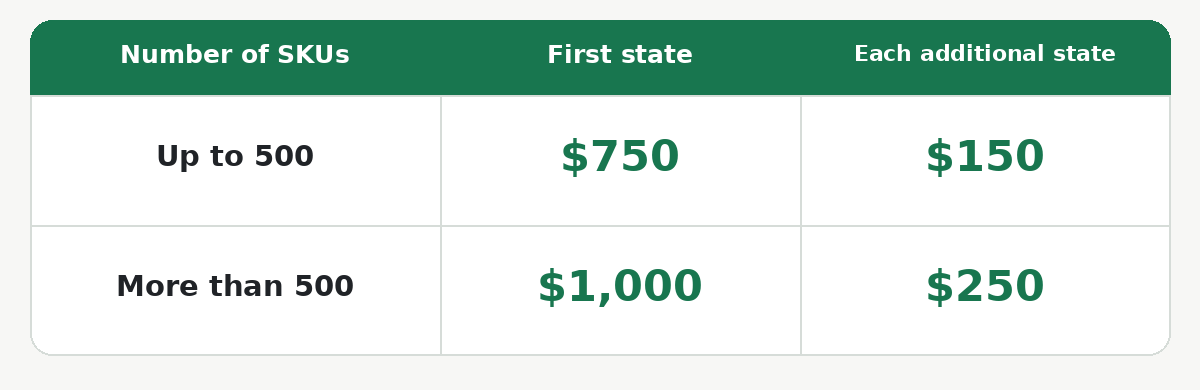
The Packaging Analysis is a separate service from the course and workbook. Pricing depends on the number of SKUs and reporting states.